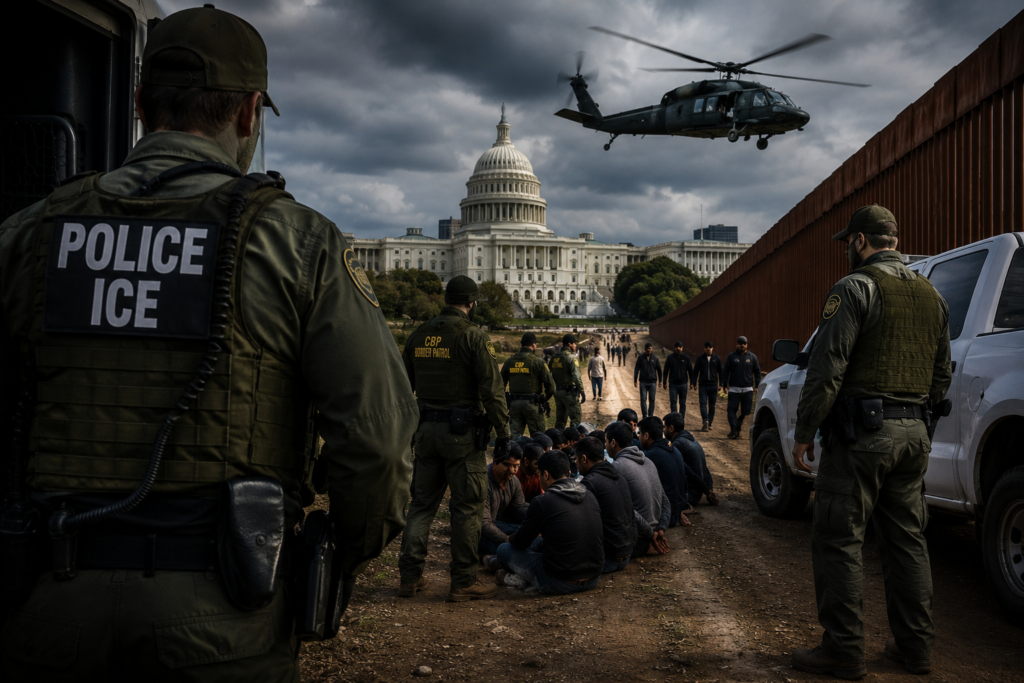
The United States Senate has adjourned and temporarily left Washington D.C. after internal disagreements among Republican lawmakers caused a major immigration enforcement funding bill to collapse before the Memorial Day recess. The stalled legislation was designed to provide approximately $70 billion in funding for Immigration and Customs Enforcement (ICE) and Customs and Border Protection (CBP). According to the provided information, President Donald Trump had requested the bill be finalized and signed into law by June 1, 2026. However, Republican leadership failed to secure enough support within the party before lawmakers departed for recess. The development marks another major setback in the ongoing debate over immigration policy, border enforcement, and federal funding priorities inside the US Congress.
Why the Senate Funding Bill Stalled
The proposed $70 billion immigration package was originally structured as a Republican only budget reconciliation bill. This approach was designed to allow Senate Republicans to move the legislation forward without requiring Democratic support. However, voting was delayed after divisions emerged inside the Republican Party over a separate Department of Justice anti weaponization program valued at approximately $1.8 billion.
According to the provided content:
- Conservative lawmakers objected to the DOJ program
- The disagreement disrupted final negotiations
- Senate leaders could not secure full consensus before recess
As a result, the immigration enforcement package stalled despite pressure from the White House.
You can read these types of news and crop your id card on ecard cutter website free without any hidden charge.
Trump Administration Deadline Missed
One of the most significant aspects of the delay is that the administration had reportedly set a clear timeline for passage. President Trump requested the package be completed by June 1, 2026, but Republican lawmakers failed to finalize the legislation before recess. Negotiations are expected to continue when the Senate returns. The delay highlights growing challenges within Republican leadership as lawmakers attempt to balance border enforcement priorities with internal policy disagreements.
What the 70 Billion Immigration Package Includes
The proposed legislation was specifically designed to fund immigration enforcement agencies that were excluded from an earlier compromise bill. According to the provided information, the package focuses heavily on ICE operations, border security enforcement, immigration detention infrastructure, and Customs and Border Protection funding. Lawmakers reportedly viewed the bill as critical to maintaining immigration enforcement operations through the remainder of Trump’s presidential term.
Background: The DHS Shutdown Crisis
The funding battle is directly connected to a larger immigration related government crisis earlier in the year. Disagreements over immigration policy caused a 75 day partial shutdown of the Department of Homeland Security (DHS). Congress eventually passed a compromise bill on May 1, 2026, which funded less controversial DHS agencies such as TSA and the Coast Guard. However, the agreement reportedly excluded funding for Immigration and Customs Enforcement (ICE) and Customs and Border Protection (CBP). This omission created pressure for lawmakers to later introduce a standalone immigration enforcement package.
Why ICE and CBP Funding Became a Separate Battle
The decision to carve out immigration enforcement funding from the earlier DHS compromise intensified political divisions in Congress.
Supporters of the standalone package argue that:
- Border enforcement agencies require long term funding certainty
- Immigration enforcement remains a national security priority
- ICE and CBP operations cannot function effectively under temporary funding uncertainty
Opponents argue that:
- The package gives excessive enforcement authority
- The funding scale is too large
- The legislation lacks sufficient oversight protections
These competing arguments continue driving the legislative standoff.
Republican Leadership Faces Internal Divisions
Although Republicans designed the bill to pass without Democratic votes, internal disagreements inside the party became the biggest obstacle. Senate Republicans disagreed over the DOJ anti weaponization program, lawmakers debated compensation mechanisms tied to the DOJ initiative, and negotiations collapsed before the recess deadline. This situation demonstrates how even unified party legislation can struggle when lawmakers disagree on related policy priorities.
What Is the DOJ Anti Weaponization Program?
The Department of Justice anti weaponization program became a major source of controversy during negotiations. The program would compensate individuals claiming they were unfairly targeted by the previous administration. Conservative lawmakers strongly supported reviewing federal agency conduct, but disagreements emerged over how the program should operate and be funded. Although separate from immigration policy, the DOJ dispute became politically tied to the larger funding package and ultimately delayed Senate action.
Democratic Opposition to the Immigration Package
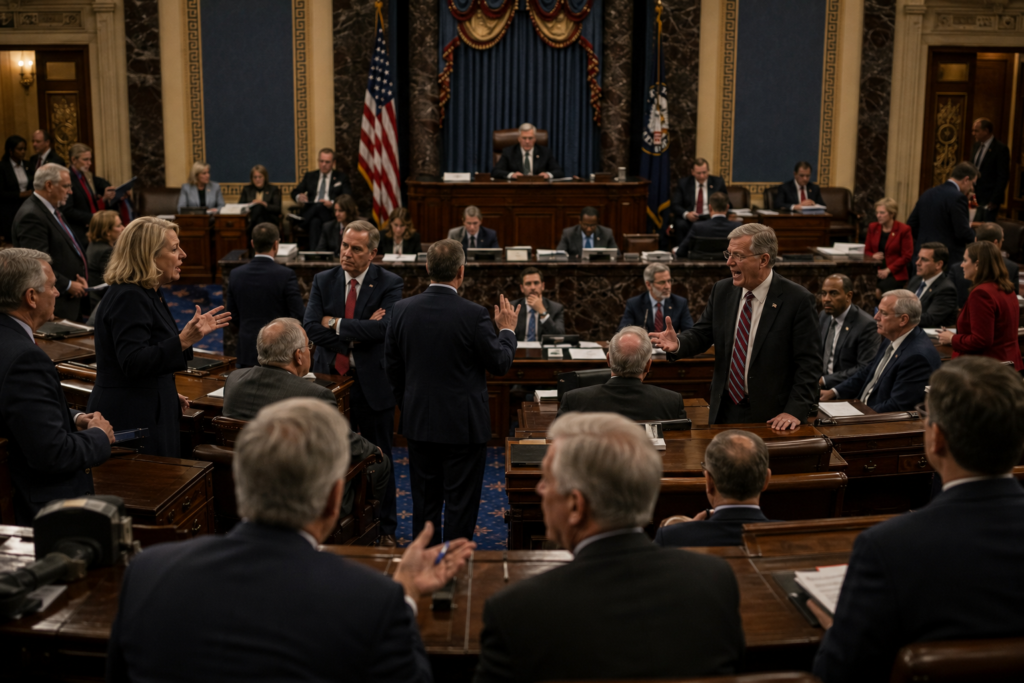
Congressional Democrats continue strongly opposing the proposed enforcement focused legislation. Representative Pramila Jayapal criticized the proposal, Representative John Larson also condemned the measure, and critics described the bill as a blank check for aggressive immigration enforcement.
Democratic lawmakers reportedly argue that:
- The bill expands deportation authority too aggressively
- Enforcement priorities are overfunded
- Immigration policy should include broader reform measures rather than enforcement alone
Concerns About Mass Deportation Policies
Opponents of the legislation claim the funding structure could significantly expand deportation operations. Critics argue the package could increase ICE detention capacity, intensify urban immigration raids, accelerate deportation operations, and expand federal immigration enforcement reach. Supporters of the bill reject those criticisms and instead argue that stronger enforcement is necessary to maintain border security and immigration law compliance.
Previous Immigration Funding Already Approved
The current dispute follows earlier major immigration related funding measures. A July 2025 reconciliation package already approved massive immigration funding. ICE reportedly received $75 billion, CBP reportedly received $64 billion, and those funds remain available through 2029. This previous funding history has become another argument point in the current debate. Critics question why additional emergency funding is necessary, while supporters argue operational demands have continued growing.
Senator Lindsey Graham’s Position
Senator Lindsey Graham defended the standalone package as necessary to secure long term funding stability for immigration enforcement agencies. Supporters of the package argue that border security operations require predictable funding, agencies need staffing certainty, and enforcement infrastructure must remain operational. The proposed legislation was therefore presented as a long term operational solution rather than a temporary budget patch.
Why the Debate Is Politically Significant
The stalled legislation is politically important because immigration remains one of the most divisive issues in American politics. The debate touches on border security, deportation policy, federal spending, executive authority, immigration reform, and law enforcement oversight. The funding battle could therefore become a major campaign issue heading into future national elections.
Senate Recess Delays Immediate Action
With the Senate now in recess, immediate action on the bill is unlikely. Lawmakers plan to revisit negotiations after Memorial Day, Senate leaders intend to resolve the DOJ dispute, and a future standalone vote is expected when Congress reconvenes. However, the delay increases uncertainty regarding the White House’s preferred timeline.
Political Pressure Likely to Increase
As negotiations continue, pressure is expected to grow from multiple sides:
- The Trump administration wants rapid passage
- Conservative lawmakers want stronger DOJ provisions
- Democrats continue opposing expanded immigration enforcement funding
This creates a difficult legislative environment for Senate leadership.
Broader Impact on Federal Agencies
The stalled package also raises questions about operational funding stability for immigration enforcement agencies. Without finalized legislation, ICE and CBP funding uncertainty may continue, operational planning could become more difficult, and staffing and enforcement expansions may face delays. The outcome of negotiations could therefore directly affect federal immigration operations nationwide.
What Happens Next?
The next phase of negotiations will likely focus on resolving Republican disagreements, determining the future of the DOJ anti weaponization program, and deciding whether the immigration package can secure enough Senate support. If Republican leadership successfully resolves internal divisions, lawmakers could still move the bill forward in early June. However, Democratic resistance and continued internal disputes may keep the legislation stalled longer than originally expected.
Conclusion
The US Senate’s decision to adjourn without passing the $70 billion immigration enforcement package highlights the growing complexity of immigration politics in Washington. Although the legislation was designed to provide major funding support for ICE and CBP, internal Republican disagreements over a separate DOJ program ultimately derailed the effort before lawmakers left for recess. The delay comes despite pressure from President Donald Trump, who reportedly wanted the bill finalized by June 1, 2026. As Congress prepares to resume negotiations after Memorial Day, the funding battle is expected to remain one of the most closely watched political issues in the United States, particularly as debates over immigration enforcement, border security, deportation policy, and federal spending continue intensifying nationwide.
Q1. How much funding was proposed in the stalled immigration enforcement bill?
The stalled legislation was designed to provide approximately $70 billion in funding for Immigration and Customs Enforcement (ICE) and Customs and Border Protection (CBP).
Q2. Why did the Senate fail to pass the immigration funding bill?
The bill stalled because of internal Republican disagreements over a separate Department of Justice anti weaponization program valued at approximately $1.8 billion.
Q.3 What was President Trump’s requested deadline for the bill?
President Donald Trump requested the package be finalized and signed into law by June 1, 2026.
Q.4 Which agencies were excluded from the earlier DHS compromise bill?
The earlier compromise bill funded less controversial DHS agencies such as TSA and the Coast Guard but excluded funding for ICE and CBP.
Q.5 How much immigration funding was already approved in July 2025?
A July 2025 reconciliation package approved $75 billion for ICE and $64 billion for CBP, with those funds remaining available through 2029.